I cooked Christmas dinner for seventeen people, and not one of my children came.
Three months later, I disappeared with every dollar they thought was waiting for them.
On Christmas Eve, my kitchen smelled like roasted turkey, honey ham, cinnamon cider, buttered potatoes, and the pecan bread Richard used to bake every December before his heart gave out. The candles threw soft gold across the dining room walls, the windows had gone black with winter, and the clock above the stove clicked so loudly it felt like it was counting my humiliation out loud.
Seventeen place settings waited on the table.
Seventeen chairs.
Seventeen names written by my own hand.
Laura. Michael. Fiona. Their spouses. My eight grandchildren.
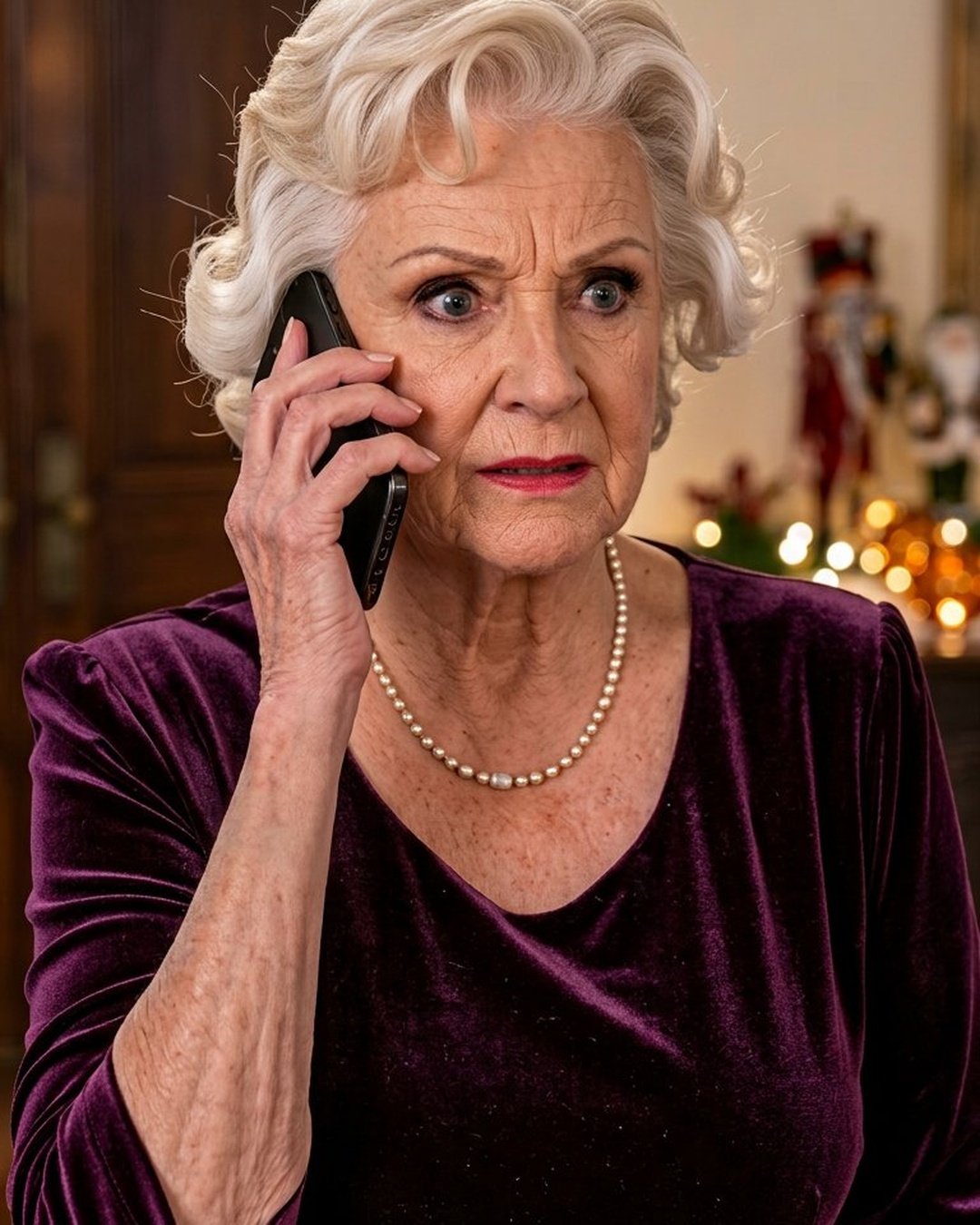
And at 8:40 p.m., I was still standing there alone in my green velvet dress, touching the pearl necklace Richard gave me on our thirtieth anniversary, pretending the next set of headlights would turn into my driveway.
They never did.
It was not snow. It was not traffic. It was not some last-minute emergency. My children simply decided that Christmas dinner at their mother’s house was not worth showing up for.
I called Laura first. Straight to voicemail. I called Michael next. Voicemail. Fiona let it ring twice before sending me away.
So I sat at the head of that beautiful table like a woman hired to decorate her own abandonment.
Nine o’clock passed. Then ten. Then eleven.
By 12:15 a.m., the gravy had formed a skin, the cider had gone cold, and the turkey had changed from perfect to pitiful. The little stockings I had bought for the grandchildren sat near the mantel, full of candy I had no one to hand to.
That was the night something inside me finally went still.
Not broken. Clear.
Richard had been gone ten years by then. One ordinary morning, he was standing in our bathroom knotting his tie for work, and the next, paramedics were counting over his chest while I gripped the doorframe so hard my fingers cramped.
After the funeral, my three children sat around me in the living room and said all the words children say when grief is fresh and everybody is watching.
“We’ll get through this together, Mom,” Laura promised.
“You’re not going to be alone,” Michael said.
Fiona cried into my shoulder and whispered, “We’ll take care of you.”
For a little while, they almost did.
Laura brought casseroles. Michael mowed the lawn. Fiona came by with the kids, and for a few noisy hours the house sounded alive again.
Then I became inconvenient.
The calls shortened. The visits thinned out. Sunday dinners disappeared. Mother’s Day became flowers ordered online. My birthday became a text message with a heart emoji and no voice behind it.
I made excuses for them for years because mothers are fluent in excuses. We can turn scraps into hope and silence into understanding until the truth has to knock the breath out of us.
The truth started showing itself in little places.
One year, I drove almost two hours to bring Michael the chocolate cake I had baked for every birthday since he was six. When I pulled into his driveway, balloons were tied to the mailbox, cars lined the curb, and music floated through the front door.
Michael opened it, saw me holding the cake, and lowered his voice like I was a problem he needed to hide.
“Mom,” he said, glancing over his shoulder. “I didn’t know you were coming.”
“It’s your birthday, sweetheart.”
His face tightened. “It’s just a thing with Anna’s family. This really isn’t a good time.”
He left me on the porch with the cake in my hands.
I cried so hard on the drive home that I had to pull into a gas station and sit there until the road stopped blurring.
I learned about my granddaughter Emily’s graduation from Facebook. I mailed her five hundred dollars and a handwritten letter telling her how proud her grandfather would have been.
She texted back, “Thanks, Grandma.”
Nothing else.
When I slipped in the garage and fractured my wrist, Laura said she would come after work. She never did. When doctors found a lump in my breast and I spent four days waiting for scan results with fear lodged in my throat, I told no one.
Not because I was brave.
Because by then, I understood there was no one to tell.
The hospital intake desk had my emergency contact on file, but that paper meant more than the people listed on it. The biopsy came back benign, and I folded the results into the same kitchen drawer where I kept old warranties, Richard’s insurance letters, and birthday cards my children no longer bothered to send.
A document can be colder than a room. At least a room does not pretend to love you.
Still, that Christmas, I tried one last time.
I called weeks in advance. I told them I did not want gifts. I did not need anything fancy. I only wanted one evening together, one proper family dinner, one night that felt like the old days when Richard was alive and the grandchildren still ran through the hallway in socks.
Laura said, “We’ll see.”
Michael said, “I’ll try.”
Fiona smiled and said, “That sounds nice.”
And because I was their mother, I translated those scraps into hope.
So I cooked for seventeen people.
I scrubbed the baseboards. I polished the silver until I could see my own tired eyes in it. I wrapped presents. I set out red napkins, white linen, candles, name cards, and all the pretty little proofs that I had not stopped loving them just because they had stopped making room for me.
The dining room froze around me that night. Candles leaned and flickered. The silverware stayed perfectly straight beside untouched plates. One chair creaked when the heat came on, and for half a second my heart lifted like somebody had finally walked in.
Nobody had.
At midnight, I looked at the food, the gifts, the empty chairs, and the driveway outside my window with no headlights in it.
Then I understood.
My children had not forgotten me.
They had decided I no longer mattered unless I was useful.
So I stood up, blew out the candles, and made the first honest decision I had made in years.
If my children wanted to live as though I were already gone, I would give them exactly that.
What they did not know was simple.
The widow they ignored still controlled everything.
The house. The acreage. Richard’s investment accounts. The lake property he bought before any of them were born. Every dollar they had privately counted a hundred times while pretending their questions were concern.
“Have you updated your will, Mom?”
“Who’s handling the lake house when you’re gone?”
“You should make things easier now so there won’t be confusion later.”
They never asked what I needed. Only what would be left.
In January, I hired a lawyer. In February, I signed documents they could not undo. I reviewed account statements, deed records, beneficiary forms, trust paperwork, and every old file Richard had kept in the locked cabinet under the stairs.
I did not rage. I did not call and beg. I did not send one angry message.
I cataloged.
I transferred.
I arranged.
By March, I was gone.
When my children finally came looking for me, it was not because they missed their mother. It was because they had gone to check on the fortune and discovered the accounts were empty, the lake property was no longer waiting for them, and the house they thought would someday become theirs had already slipped beyond their reach.
Laura called first, voice sharp and breathless.
“Mom, where are you?”
Michael called seven minutes later.
“What did you do?”
Fiona left a message at 3:42 p.m. that sounded almost like crying until she said, “You can’t just make decisions like this without talking to us.”
That made me laugh once, quietly, in a small apartment they did not know existed, with my suitcase by the door and Richard’s old photograph on the counter.
Because I had talked to them for ten years.
They just had not listened.
And when they finally opened the final envelope my lawyer left waiting for all three of them, the room went so quiet even Laura stopped breathing like she owned the air.
Because the first page was not a will.
It was a letter.
Part 2
“Dear Laura, Michael, and Fiona,
By now, you have probably realized that everything you took for granted is no longer within your grasp. Let me tell you why.
Christmas was always a magical time in our household, wasn’t it? Richard used to make it so special with his laughter, his stories, and that pecan bread that filled the house with warmth. I tried my best to keep that magic alive, even when his absence left a void too deep to fill. I held on because I believed in our family, in the bonds that once meant something. But that Christmas Eve, standing in a room beautifully set for seventeen, I finally saw the truth clearly: I was alone.
The days that followed were full of silent realizations. I understood that the love we once shared had faded, replaced with expectations and obligations. You all had your lives, your families, your priorities. I was no longer part of that picture, and I understood that. But understanding doesn’t ease the pain. It doesn’t fill the empty chairs around a dinner table or the quiet moments in a house once filled with laughter.
So, I made a decision. I chose to step away, to reclaim the life and happiness I deserved. I found a small apartment where I could start anew, away from the shadows of what once was and the expectations of what might have been. I took control of what was rightfully mine and made sure it would be put to good use—perhaps not in the way you expected, but in a way that finally brings me peace.
I’ve invested in things that matter, in people who need a helping hand, and in causes that will make the world a bit brighter. Richard would have wanted that. He believed in sharing love and kindness, in extending a hand where it’s needed the most. That is how I choose to honor him, and myself, moving forward.
As for you, my dear children, I hope you find happiness in the lives you’ve built. I hope you teach your children the value of family and never take for granted the people who love you unconditionally. I hope you find the time to listen, truly listen, to each other in ways you never did with me.
I leave you with this: a chance to reflect, to understand what truly matters. Because life is shorter than we imagine, and the people who love us won’t always be waiting in the wings.
With all my love,
Mom
As I folded the letter into the envelope, I couldn’t help but smile. It was a new beginning for me, a chance to focus on the good things left in life—small joys, new friendships, quiet contentment. It was a chance to finally live for myself.
If you’re interested in discovering where this journey takes me next, stay tuned for Part 3. If you want to read more, leave a comment below this Facebook post.