My name is Claire Morgan.
At thirty-four, I arrived at Vincent Moretti’s Connecticut estate carrying one suitcase and enough nerves to make my hands cold.
The gates opened onto a property that looked more like a private resort than a home.
Marble.
Glass.
Manicured gardens.
Security cameras everywhere.
My secondhand cardigan suddenly felt painfully obvious.
Everyone knew Vincent Moretti’s reputation.
Publicly, he was a forty-year-old billionaire investor with restaurants and real estate across the Northeast.
Privately, people whispered that his influence reached into industries most people never even thought about.
The nanny agency had called me less than twenty-four hours earlier.
Live-in position.
Twin seven-year-old boys.
Unexplained medical problems.
Exceptional salary.
The house manager, Mrs. Harper, escorted me into Vincent’s office.
Medical reports covered his desk.
Vincent himself looked nothing like the polished photographs I’d seen online.
He looked exhausted.
“You’ve cared for medically complicated children?” he asked.
“For eight years.”
“What makes you different from the other nannies?”
“I watch ordinary things.”
His eyebrow lifted.
“Explain.”
“Meals. Sleep. Cleaning products. Routines. What changes when symptoms improve or worsen. Specialists see children for appointments. A caregiver sees their entire day.”
For the first time, Vincent seemed interested.
He pushed a folder toward me.
“My sons, Lucas and Leo, have been getting weaker for almost eighteen months.”
The records listed fatigue, recurring discomfort, poor concentration, appetite changes, and weight loss.
“They used to race each other through this house,” Vincent said quietly. “Now there are mornings when getting downstairs exhausts them.”
“How many specialists?”
“More than I can count. New York, Boston, Philadelphia. Over three million dollars.”
“No clear explanation?”
“None.”
I glanced through the file.
“What about their mother?”
His expression closed immediately.
“Isabella passed away after a traffic accident four years ago.”
“I’m sorry.”
“The boys became unwell afterward.”
Before I could ask anything else, the office door opened.
A silver-haired man walked in without knocking.
Dr. Harrison Blake.
His gaze landed on me.
“Who’s this?”
“Claire Morgan,” Vincent answered. “Potential nanny.”
Dr. Blake gave a short laugh.
“You’re hiring another babysitter?”
“Nanny,” I corrected calmly.
His smile became condescending.
“These boys need medical expertise, not household help playing detective.”
“I agree.”
That seemed to surprise him.
“Then we understand each other.”
“Not exactly. How long have you treated them?”
His eyes narrowed.
“Eleven months.”
“And you’ve identified the cause?”
Silence.
Vincent leaned back in his chair.
Dr. Blake’s face tightened.
“You should stay within your qualifications.”
“I intend to. My qualification is noticing what happens when doctors aren’t here.”
Vincent watched us both.
Then stood.
“She’s hired.”
Dr. Blake stared at him.
“Vincent, that’s absurd.”
“That wasn’t a request for your approval.”
The doctor gathered his papers and left, visibly irritated.
Vincent looked at me.
“You enjoy provoking people?”
“No. I just don’t confuse arrogance with expertise.”
That earned the faintest smile.
He led me upstairs.
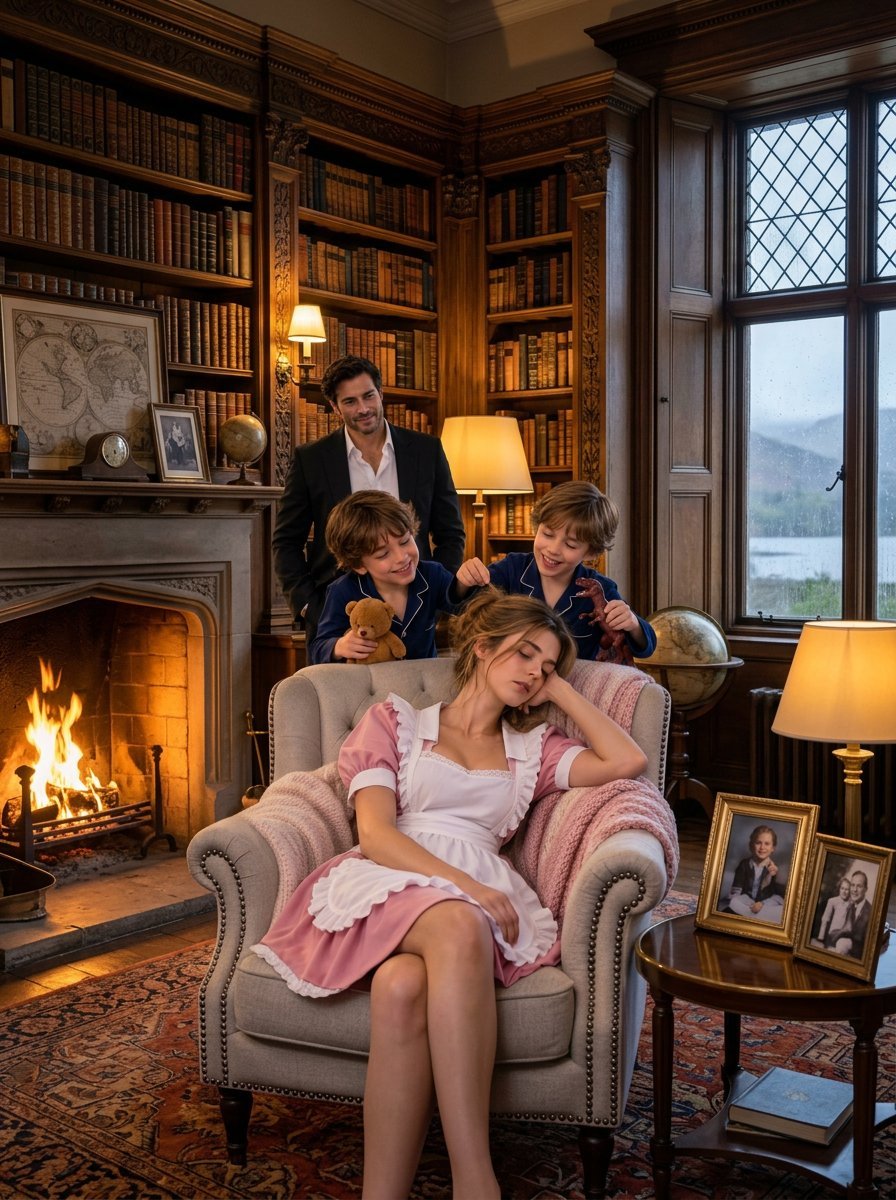
Lucas and Leo had adjoining bedrooms at the end of a long hallway.
Before Vincent opened the first door, I stopped.
There was a smell.
Faint.
Sweet.
Almost floral, but with something artificial underneath.
“What is that?” I asked.
Vincent frowned.
“What?”
“The smell.”
He inhaled.
“I don’t smell anything.”
I moved toward a decorative ventilation grate positioned between the boys’ rooms.
The scent was stronger there.
“When was this ventilation system last inspected?”
Vincent’s expression changed.
“I don’t know.”
“Who controls it?”
“The household system is automated.”
“That isn’t what I asked.”
He stared at me.
Behind us, Mrs. Harper suddenly dropped the stack of towels she was carrying.
I turned.
She was staring at the vent.
And the fear on her face told me someone in that mansion knew exactly what I had just noticed.
Mrs. Harper’s face had gone completely white.
For three seconds, nobody moved.
Then she bent quickly and gathered the towels from the floor.
“I’m sorry,” she murmured.
I watched her hands.
They were trembling.
Not the nervous trembling of someone embarrassed by dropping laundry.
Fear.
Real fear.
“Mrs. Harper,” I said softly. “When was the ventilation system last inspected?”
She looked toward Vincent.
He was still staring at the grate.
“Answer her,” he said.
Mrs. Harper swallowed.
“Six months ago.”
“By whom?”
“The maintenance company.”
“Which company?”
She hesitated.
“Moretti Property Services.”
Vincent’s jaw tightened.
“That’s an internal company.”
“Yes, sir.”
“Who signed the inspection?”
“I don’t know.”
I crouched beside the vent.
The smell was stronger now.
Sweet.
Artificial.
Almost like flowers left too long in a vase.
But underneath it was something sharp.
Chemical.
I touched the metal grate.
Cool.
No visible dust.
That bothered me.
A ventilation grate in a seven-year-old boy’s bedroom should have at least some dust around the edges.
This one looked recently cleaned.
“Can I see the boys?” I asked.
Vincent nodded.
He opened Lucas’s door.
The room was beautiful.
Too beautiful.
A miniature world designed by someone who had studied childhood from photographs.
A blue racing-car bed.
Shelves filled with expensive toys.
A telescope beside the window.
A huge television.
Everything perfectly arranged.
And everything strangely untouched.
Lucas sat against his headboard reading a comic book.
His face was pale.
His cheeks looked thinner than they probably had a year earlier.
His eyes lifted toward me.
“Are you the new nanny?”
“Yes.”
“Are you staying?”
“If your father lets me.”
Lucas glanced toward Vincent.
“He lets people stay until they stop being useful.”
Vincent stiffened.
“Lucas.”
The boy shrugged.
“I’m just telling her.”
I smiled.
“That sounds like a very important rule.”
Lucas studied me.
Then pointed toward the adjoining door.
“That’s Leo’s room.”
“I know.”
“He’s sleeping.”
“What time does he usually sleep?”
“Whenever Dad tells him.”
“And when do you feel worst?”
Lucas thought.
“Morning.”
“Every morning?”
“Mostly.”
“What about afternoons?”
“Sometimes better.”
I exchanged a glance with Vincent.
He said nothing.
“Does anything make you feel worse?” I asked.
Lucas frowned.
“Sometimes my head hurts when the room smells weird.”
My stomach tightened.
“What smell?”
He looked toward the vent.
“That.”
Vincent stepped forward.
“You’ve noticed it before?”
Lucas nodded.
“Leo hates it.”
“How long has it smelled that way?”
Lucas shrugged.
“Forever.”
I looked at Vincent.
He looked stunned.
“Why didn’t you tell me?”
“I did.”
“When?”
“Last month.”
Vincent’s face changed.
“Lucas, you never told me.”
“Yes, I did.”
“Who did you tell?”
Lucas hesitated.
“Dr. Blake.”
Silence.
A cold feeling settled in my stomach.
“What did he say?” I asked.
Lucas lowered his comic.
“He said I was imagining things.”
Vincent stared at the boy.
Then at the vent.
Then at me.
“Get Leo,” he said.
Mrs. Harper hurried into the adjoining room.
A moment later, she returned carrying a sleeping child.
Leo looked even thinner than Lucas.
His hair was damp against his forehead.
“Is he sick?” I whispered.
“Just tired,” Vincent said.
But his voice sounded uncertain.
Leo stirred.
His eyes opened halfway.
“Dad?”
“I’m here.”
“Why are you in my room?”
“Just checking on you.”
Leo looked at me.
“New nanny?”
“Yes.”
He smiled weakly.
“Do you know how to make pancakes?”
“I do.”
“With chocolate?”
“If your father allows it.”
Leo looked at Vincent.
“He never lets us have chocolate.”
“That’s not true.”
“It is.”
Vincent sighed.
“Maybe sometimes.”
Leo closed his eyes.
Then suddenly coughed.
It wasn’t dramatic.
Just a small cough.
But his face tightened afterward.
I noticed something.
His breathing changed.
Very slightly.
He seemed to breathe more comfortably when Vincent carried him away from the bed.
I followed.
“Put him near the window.”
Vincent did.
Leo’s breathing eased.
I looked back at the room.
The vent.
The bed.
The window.
And the strange sweet smell.
“Mr. Moretti,” I said, “I want the boys sleeping somewhere else tonight.”
Vincent stared at me.
“Why?”
“Because I don’t know what that smell is.”
“You think the ventilation is making them sick?”
“I think we don’t know what the ventilation is doing.”
“That’s not the same thing.”
“No.”
I looked directly at him.
“But if your sons are worse in the morning and better later in the day, and the smell is strongest around the ventilation system, I wouldn’t gamble with another night.”
Vincent’s expression hardened.
“How serious do you think this is?”
“I don’t know.”
“Then say what you do know.”
“I know something in this house is making those boys sick.”
Behind us, Mrs. Harper made a small sound.
Vincent turned.
“You agree?”
She looked down.
“I don’t know, sir.”
“Mrs. Harper.”
She took a breath.
“There have been complaints.”
“From whom?”
“The boys.”
“How long?”
“Months.”
“Why didn’t you tell me?”
Her eyes filled with tears.
“I did.”
Vincent froze.
“When?”
“Three times.”
His face became unreadable.
“Who did you tell?”
“Dr. Blake.”
There it was again.
The same answer.
Dr. Harrison Blake.
Vincent turned away.
For a long moment, he said nothing.
Then he took out his phone.
“Call security.”
Mrs. Harper immediately left.
I watched him.
“What are you going to do?”
“Shut down the ventilation system.”
“That may not be enough.”
“I know.”
He looked at me.
“You said you watch ordinary things.”
“Yes.”
“Then tell me what you see.”
“The boys are worse after sleeping.”
“Yes.”
“The smell is strongest near the vent.”
“Yes.”
“They improve when they’re away from this room.”
“We don’t know that.”
“I think we do.”
“Why?”
“Because Leo’s breathing improved within thirty seconds of moving away from the bed.”
Vincent looked at his son.
Then at me.
“What else?”
I pointed toward the ceiling.
“The vents in both bedrooms connect to something.”
He followed my gaze.
“What?”
“An air system.”
“I know.”
“No. I mean they connect physically.”
He frowned.
“How can you tell?”
“The vent spacing.”
I explained that the bedrooms were mirror images.
If the ventilation was independently zoned, the ductwork would probably be separated.
But the smell was strongest at the central hallway vent, and both bedrooms carried the same odor.
“You’re saying one source?”
“Possibly.”
He picked up his phone.
“Call the maintenance supervisor.”
“Don’t.”
He looked at me.
“Why?”
“Because if someone deliberately contaminated the system, calling the person responsible for maintaining it could give them time to destroy evidence.”
Vincent’s eyes narrowed.
“You think someone did this deliberately?”
“I think your house is too expensive for me to assume every strange thing is an accident.”
He stared at me for several seconds.
Then nodded.
“Security.”
A guard appeared almost immediately.
“Lock down the east wing.”
“Yes, sir.”
“No one enters or leaves that section without my authorization.”
The guard nodded.
Vincent looked at me.
“Take the boys downstairs.”
“Where?”
“My study.”
“Why not outside?”
He paused.
Then understood.
“Because we don’t know if the outside air is safe either.”
“Exactly.”
He lifted Leo.
I took Lucas’s hand.
As we walked downstairs, Lucas looked up at me.
“Are we in trouble?”
“No.”
“Then why is Dad scared?”
I glanced toward Vincent.
He heard the question.
“I’m not scared.”
Lucas raised an eyebrow.
“You are.”
Vincent almost smiled.
“Maybe a little.”
Lucas squeezed my hand.
“I told Dad.”
“I know.”
“He didn’t believe me.”
“I believe you.”
The boy looked at me.
For the first time, his expression softened.
“Thank you.”
The next three hours changed everything.
Vincent’s private security team sealed the east wing.
The boys were examined by an emergency pediatrician who arrived from Hartford.
Their oxygen levels were normal.
Their blood pressure was slightly low.
The doctor asked about symptoms.
Fatigue.
Headaches.
Nausea.
Poor appetite.
Difficulty concentrating.
Occasional dizziness.
Weight loss.
Nothing dramatic.
Nothing that pointed immediately to one obvious diagnosis.
But when the doctor heard about the ventilation system, he became serious.
“Keep them away from those rooms.”
Vincent nodded.
“Could exposure explain eighteen months of symptoms?”
“It depends on the substance.”
“What substance?”
“I don’t know yet.”
“Then find out.”
The doctor looked at him.
“Mr. Moretti, medicine isn’t a vending machine.”
Vincent’s expression remained cold.
“I didn’t spend three million dollars because I enjoy vending machines.”
The doctor sighed.
“I’ll order a broader toxicology panel.”
“Do it.”
When the doctor left, Vincent turned to me.
“Would you like to explain why you didn’t notice this when you arrived?”
I looked at him.
“Because I arrived twenty minutes ago.”
He blinked.
Then unexpectedly laughed.
“Fair.”
The boys were eventually moved to a guest suite on the opposite side of the mansion.
I stayed with them.
Lucas fell asleep quickly.
Leo didn’t.
He sat beside me beneath a blanket.
“Can I ask you something?”
“Sure.”
“Do you think Mom made us sick?”
My heart stopped.
“Why would you think that?”
“Dad says Mom died.”
“He did.”
“But people say things when they think I’m asleep.”
“What things?”
Leo looked down.
“They say Mom knew something.”
I remained very still.
“What did she know?”
“I don’t know.”
“Who says that?”
“Dr. Blake.”
My pulse quickened.
“When?”
“Sometimes when he talks to Dad.”
“Did he ever talk to you about your mother?”
Leo nodded.
“He said she was unstable.”
Lucas stirred from the other bed.
“Don’t listen to him.”
Leo looked over.
“He said Mom wanted to leave Dad.”
Lucas opened his eyes.
“She didn’t.”
“How do you know?”
“Because she promised.”
“Promised what?”
Lucas looked at me.
“She promised she’d come back.”
“Come back from where?”
“The hospital.”
I frowned.
“What hospital?”
Lucas looked confused.
“The hospital after the accident.”
Vincent had told me Isabella died in a traffic accident four years ago.
But the boys had been old enough to remember parts of what followed.
“What happened?” I asked.
Lucas sat up.
“Mom was driving to the city.”
“Why?”
“She said she had to meet someone.”
“Who?”
He shrugged.
“She didn’t say.”
“Then what?”
“She crashed.”
“Did you see her afterward?”
“No.”
“Did your father?”
“Yes.”
“Did he tell you what happened?”
Lucas nodded.
“He said she was gone.”
Leo whispered:
“But Mom called us that night.”
I turned toward him.
“What?”
Lucas immediately said:
“Leo.”
“She did.”
“When?”
“The night after the accident.”
My heart began pounding.
“What did she say?”
Leo looked frightened.
“She said we had to listen to Dad.”
“Anything else?”
“She said not to trust the doctor.”
Neither boy needed to say which doctor.
At midnight, Vincent came into the guest suite.
He looked as though he had aged ten years in one evening.
“The boys asleep?”
“Lucas is.”
“Leo?”
“Almost.”
He looked at them for a while.
Then asked quietly:
“What did they tell you?”
I didn’t answer immediately.
“What did they tell you?”
“That their mother called them after the accident.”
Vincent froze.
“What?”
“Leo says Isabella called the night after the accident.”
“That’s impossible.”
“Why?”
“Because she was dead.”
“Did you personally see her body?”
His face hardened.
“Claire.”
“I’m not accusing you. I’m asking questions.”
“Why?”
“Because your sons are sick, someone dismissed their symptoms for more than a year, and now we’re discovering they repeatedly complained about the same smell that may be connected to their illness.”
Vincent rubbed his forehead.
“You think Dr. Blake is involved.”
“I think we shouldn’t rule it out.”
“He’s been treating my sons for eleven months.”
“Exactly.”
“He’s one of the most respected specialists in the country.”
“So were the doctors before him.”
Vincent looked at me.
“What do you know about medicine?”
“Enough to know when someone is avoiding a question.”
He walked toward the window.
“I trusted Harrison.”
“Why?”
“He treated Isabella.”
I stared at him.
“You never mentioned that.”
“You never asked.”
“What did he treat her for?”
“Isabella had anxiety.”
“Before the accident?”
“Yes.”
“Did Dr. Blake diagnose her?”
“Yes.”
“Was she taking medication?”
“Yes.”
“What medication?”
“I don’t remember.”
“You don’t remember what your wife took?”
His eyes closed.
“She didn’t always tell me.”
“Did she ever complain about Dr. Blake?”
His silence answered me.
“What did she say?”
“That he was controlling.”
“Did you believe her?”
He turned.
“No.”
I studied his face.
“And now?”
“Now I don’t know what to believe.”
At 1:17 a.m., security found something.
A hidden maintenance panel behind a decorative wall in the hallway.
Inside were ventilation controls that weren’t listed on the home’s current plans.
A technician knelt beside it.
“There’s an auxiliary line here.”
“Where does it go?” Vincent asked.
“East wing.”
“Bedrooms?”
“Yes.”
“Can you trace it?”
“Not without opening the duct.”
Vincent looked at me.
“Open it.”
The technician hesitated.
“We’ll need an environmental team.”
“Call one.”
Within forty minutes, two specialists arrived wearing protective equipment.
They tested the air.
Then the duct.
One looked at his instrument.
“Mr. Moretti.”
“What?”
“You need to leave this area.”
“Why?”
“We’re detecting elevated volatile organic compounds.”
Vincent went pale.
“Which ones?”
“We need laboratory analysis.”
“Is it dangerous?”
“Potentially.”
“To children?”
“Yes.”
The words seemed to hit him physically.
“Can you tell if the source is inside the house?”
“Yes.”
“Where?”
“Inside the ventilation system.”
The next morning, the boys’ bloodwork came back.
The pediatrician sat across from Vincent.
“There are abnormalities.”
“What kind?”
“Elevated liver enzymes. Mild abnormalities in kidney function. Some neurological markers are concerning.”
“Cause?”
“Not yet.”
Vincent slammed his hand onto the desk.
“Then what are we waiting for?”
“The toxicology report.”
“How long?”
“Twenty-four to forty-eight hours.”
“That’s unacceptable.”
“It doesn’t become faster because you’re wealthy.”
Vincent stared at him.
Then took a breath.
“Sorry.”
The doctor nodded.
“There’s one thing I want to ask. Were the boys ever hospitalized?”
“Yes.”
“When?”
“Several times.”
“For what?”
“Dehydration. Weakness. Headaches.”
“Did their symptoms improve?”
“Yes.”
“Did they worsen after returning home?”
Vincent stopped.
He looked at me.
I looked at him.
“Every time?” I asked.
He nodded slowly.
“I never noticed the pattern.”
“You were looking for a disease.”
He looked toward the floor.
“I was looking for something inside their bodies.”
“And the problem may have been outside them.”
That afternoon, I found something else.
A photograph.
It was tucked behind an old book in the library.
Isabella stood beside the boys.
Lucas and Leo looked four years younger.
Happy.
Healthy.
And beside Isabella stood Dr. Harrison Blake.
There was writing on the back.
I recognized Isabella’s handwriting from other items around the house.
If Vincent ever doubts me, show him this.
Harrison knows why.
My hands went cold.
I found Vincent in his office and placed the photograph on his desk.
He stared at it.
Then read the writing.
His face changed.
“Where did you find this?”
“Library.”
“I’ve never seen this.”
“Why would Isabella write that?”
“I don’t know.”
“Did she know something about Dr. Blake?”
“I don’t know.”
“You need to answer differently.”
He looked at me.
“How?”
“By telling me the truth.”
He sat down.
“I wasn’t a good husband.”
I said nothing.
“I was traveling constantly. Building companies. Acquiring businesses. I thought money could solve everything.”
His voice became quieter.
“Isabella hated it.”
“Did she want to leave?”
“Yes.”
“Did she threaten divorce?”
“Yes.”
“Did you stop her?”
“No.”
“Did she have evidence against Blake?”
“I don’t know.”
“Did she meet someone before her accident?”
“I don’t know.”
He looked at the photograph.
“But two weeks before she died, she told me something.”
“What?”
“She said someone was poisoning the boys.”
My blood ran cold.
“What?”
“I thought she was paranoid.”
“Because of her anxiety diagnosis?”
“Yes.”
“Who diagnosed her?”
“Harrison.”
“And what happened afterward?”
“She became convinced he was monitoring her.”
“Was he?”
Vincent looked at me.
“I don’t know.”
“Then find out.”
By evening, Vincent’s security team discovered that the auxiliary ventilation line wasn’t connected to the original house system.
It had been installed later.
Four years earlier.
Shortly before Isabella’s death.
The installation paperwork was signed by a company that no longer existed.
But one employee name appeared repeatedly.
Daniel Reed.
Former Moretti estate maintenance supervisor.
Vincent immediately called his head of security.
“Find him.”
“Already trying.”
“Where?”
“North Carolina, possibly.”
“Possibly isn’t good enough.”
“We’ll locate him.”
Vincent turned toward me.
“You’re staying with the boys tonight.”
“Yes.”
“Don’t leave the house.”
“I wasn’t planning to.”
“And Claire?”
“Yes?”
“If anything happens, call me immediately.”
I almost smiled.
“Where are you going?”
“To find the man who installed that system.”
At 10:42 p.m., the mansion lost power.
Everything went black.
Lucas screamed.
Leo started crying.
I grabbed my flashlight.
“Stay together.”
The emergency lights came on after five seconds.
The boys were huddled together.
A sound came from the hallway.
Footsteps.
Slow.
I stood.
“Stay here.”
I opened the door.
The hallway was empty.
Then I smelled it.
The same sweet chemical odor.
Stronger.
Much stronger.
I immediately shut the door.
“Lucas, get away from the vent.”
He moved.
“Leo, too.”
“What happened?”
“Nothing.”
But my heart was racing.
I called Vincent.
No answer.
Again.
Nothing.
Then my phone vibrated.
Unknown number.
I answered.
“Hello?”
Silence.
Then a man’s voice.
“Stop asking questions.”
The call ended.
The boys stared at me.
Twenty minutes later, Vincent returned.
His face was furious.
“Why didn’t you answer?”
“I was dealing with a problem.”
I told him about the call.
He went completely still.
“Someone called you?”
“Yes.”
“What did they say?”
“Stop asking questions.”
He turned toward security.
“Lock every gate.”
“Already done.”
“Search the property.”
“Already happening.”
Vincent looked at me.
“Did they threaten you?”
“Not directly.”
His expression darkened.
“They’re threatening everyone now.”
The next morning, the toxicology report arrived.
The pediatrician called Vincent personally.
“I need you to sit down.”
Vincent did.
I stood beside him.
“What did you find?”
“There are markers consistent with prolonged exposure to an industrial solvent.”
“What solvent?”
“Not one compound. A mixture.”
“Can it cause their symptoms?”
“Yes.”
“Can it cause permanent damage?”
“If exposure continues.”
Vincent’s face went pale.
“How long have they been exposed?”
“We can’t know precisely.”
“Could it be eighteen months?”
“Yes.”
“Could it be longer?”
“Possibly.”
Vincent looked toward the ceiling.
“Then why didn’t anyone find it?”
“Because the symptoms are nonspecific.”
He looked at me.
“You were right to notice the environment.”
I felt no satisfaction.
Two children had been sick for eighteen months.
And all it had taken to uncover the first real clue was someone noticing a smell.
Vincent ordered every room tested.
Every vent.
Every water line.
Every cleaning product.
Every mattress.
Every chemical stored on the property.
The mansion became a laboratory.
Then they found it.
Inside the ventilation shaft above the boys’ bedrooms was a small metal canister.
It wasn’t part of the original system.
It had been attached directly to the duct.
Inside was residue from the same solvent mixture detected in the boys’ blood.
Vincent stared at it.
“Someone put that there.”
The environmental specialist nodded.
“Yes.”
“Could it have happened accidentally?”
“No.”
“Why?”
“Because this device was designed to disperse material into the airflow.”
Vincent’s face went cold.
I looked at him.
“Someone wasn’t making the boys sick by accident.”
“No,” he said.
“Someone was dosing the house.”
That night, Vincent finally told me the rest.
Isabella had discovered something six weeks before her death.
She suspected Dr. Blake was manipulating her medical records.
She secretly hired an investigator.
The investigator found that Blake had been prescribing medication under questionable circumstances.
But before Isabella could confront him, she died.
Vincent had assumed the investigator’s claims were part of her paranoia.
He fired the investigator.
Buried the files.
And trusted Blake.
For four years.
“Where are the investigator’s files?” I asked.
“I don’t know.”
“Who might?”
He paused.
“Isabella’s lawyer.”
“Name?”
“Margaret Sloan.”
“Call her.”
Vincent did.
She answered on the second ring.
“Vincent?”
“I need everything Isabella gave you.”
There was a long silence.
Then:
“I wondered when you’d ask.”
Vincent’s eyes widened.
“You knew?”
“I knew Isabella was afraid.”
“Why didn’t you tell me?”
“She told me not to.”
“Why?”
“Because she believed someone inside your organization was watching you.”
“Who?”
“I don’t know.”
Then Margaret told him Isabella had left something behind.
A safe-deposit box in Manhattan.
With instructions that Vincent receive the key if he ever came looking for the truth.
We drove to Manhattan that night.
Security followed us.
The boys remained at a private medical facility under guard.
The box contained three things.
A flash drive.
A photograph.
And a handwritten letter.
Vincent opened the letter first.
I watched his face change.
Isabella wrote that she had become convinced someone was deliberately making the boys sick.
She discovered that Dr. Blake had access to their medical records, household medical information, and prescriptions.
Then she uncovered something else.
A company connected to Blake had received nearly $800,000 from one of Vincent’s business subsidiaries.
Vincent stared at the figures.
“I don’t recognize this company.”
“You should,” I said after reading further.
“Why?”
“Because you owned it.”
The company had been acquired by Moretti Holdings three years earlier, then sold eighteen months later.
During that period, it paid Dr. Blake’s consulting company.
“Who authorized the payments?”
The answer was on the flash drive.
Richard Cole.
Vincent’s chief financial officer.
His closest business adviser.
A man who had worked for him for twelve years.
A man who attended Isabella’s funeral.
A man with access to everything.
Including the estate.
When we returned to Connecticut, Richard was already waiting.
He stood inside Vincent’s office.
“Where have you been?”
Vincent closed the door.
“Investigating.”
Richard smiled.
“About the boys?”
“Yes.”
“I heard about the ventilation issue.”
“Of course you did.”
Richard’s smile disappeared.
“What does that mean?”
Vincent placed a photograph of the canister on the desk.
“Recognize it?”
Richard stared.
“No.”
“Lie again.”
Richard’s face paled.
“Vincent—”
“Who installed the auxiliary ventilation?”
“I don’t know.”
“Who authorized the payments to Blake?”
“I handled thousands of transactions.”
“Who?”
“I’d have to check.”
Vincent leaned forward.
“Check.”
Richard looked toward me.
“Who is she?”
“The nanny.”
Richard laughed nervously.
“You’re questioning me because of a nanny?”
“No.”
Vincent’s voice became ice.
“I’m questioning you because my sons are sick.”
Richard stood.
“You’re making a mistake.”
“Maybe.”
Vincent picked up the flash drive.
“But I’m making it carefully.”
Richard lunged.
Security moved instantly.
Two guards grabbed him.
“Search him.”
A guard found a small USB device in Richard’s pocket.
The security chief connected it to a secured computer.
Files appeared.
Medical records.
Financial records.
Photographs.
Household schedules.
Everything.
Someone had been monitoring the boys for years.
And one folder was labeled:
ISABELLA
Vincent opened it.
Dozens of audio and video files appeared.
One was dated three days before Isabella’s accident.
He clicked it.
Isabella appeared on screen.
She looked frightened.
“Vincent, if you’re watching this, something has happened to me.”
She paused.
“I need you to understand something.”
“Harrison isn’t treating the boys. He’s studying them.”
Vincent’s breathing stopped.
“The symptoms are not random. They happen after exposure to something in the house.”
She looked toward the camera.
“I found the device.”
Vincent covered his mouth.
“I confronted Harrison. He told me I was imagining things.”
Then Isabella whispered:
“Richard is helping him.”
Richard stopped struggling.
“If anything happens to me, don’t trust either of them.”
Then Isabella looked directly into the camera.
“And don’t let them take the boys out of the house.”
The video ended.
Silence.
Vincent slowly turned toward Richard.
“Why?”
Richard began crying.
“I didn’t know it would go this far.”
“You poisoned my sons.”
“I didn’t poison them.”
“You installed the system.”
“I followed instructions.”
“Whose?”
Richard said nothing.
“Whose?”
“Harrison.”
Dr. Blake was arrested two days later.
But that was only the beginning.
When investigators searched Dr. Blake’s office, they found records suggesting Lucas and Leo were not the only children whose symptoms had been manipulated.
There were eleven other families.
Different cities.
Different diagnoses.
Different substances.
Different companies.
But the same pattern.
Medical uncertainty.
Private treatment.
Long-term environmental exposure.
And money moving through hidden consulting firms.
Investigators concluded that Blake had built a business around making illnesses difficult to diagnose.
He targeted families wealthy enough to pay for years of specialists and treatment.
Controlled environmental exposures created persistent symptoms.
Not necessarily enough to cause immediate catastrophe.
Enough to keep children sick.
Parents searched desperately for answers.
Blake recommended more testing.
More appointments.
More treatment.
And whenever symptoms worsened, the illness itself took the blame.
Richard had provided access.
The Moretti estate had given them the perfect environment.
And Isabella had discovered them.
At first, investigators believed her death might also be connected.
Three weeks later, additional evidence strengthened that suspicion.
Her traffic accident had not been as straightforward as Vincent had been told.
Investigators found evidence that the vehicle’s braking system had been tampered with before the crash.
Vincent spent three days barely speaking.
When I found him sitting alone in the library, he looked broken.
“She tried to save them.”
“Yes.”
“I didn’t believe her.”
I said nothing.
“I thought she was paranoid.”
“You believed what you were being told.”
“I should have believed her.”
He looked at me.
“How do you forgive yourself for that?”
I didn’t have a comforting answer.
So I gave him the only honest one I had.
“You don’t.”
He looked down.
“You make sure you never make the same mistake again.”
Six months later, the mansion felt completely different.
The east wing had been rebuilt.
Every ventilation line had been replaced.
The boys’ bedrooms were redesigned.
But Vincent refused to let them sleep there.
Instead, he turned their former bedrooms into a playroom.
Lucas loved it.
Leo loved it even more.
More importantly—
they were improving.
Their weight began returning.
Their energy came back.
They started racing down hallways again.
They complained about homework.
Argued over video games.
Demanded pancakes every Sunday.
Normal things.
Beautiful things.
One morning, I found them racing across the garden.
Lucas reached the fountain first.
Leo immediately accused him of cheating.
I laughed.
Vincent stood beside me.
“Do you remember the first thing you said when you arrived?”
“What?”
“You said you watched ordinary things.”
“I did.”
“You saved them by watching ordinary things.”
“No.”
I looked at him.
“The doctors saved them.”
He shook his head.
“The doctors eventually did.”
He looked toward his sons.
“But you noticed.”
I smiled.
“That’s my job.”
He remained quiet for a moment.
Then said:
“I want you to stay.”
“I thought you already hired me.”
“I mean permanently.”
I laughed.
“You’re offering me a lifetime contract as a nanny?”
“Maybe.”
“That sounds suspiciously like a job with no vacation.”
“You can have vacations.”
“Paid?”
“Obviously.”
“Health insurance?”
“Yes.”
“Chocolate privileges for the boys?”
He laughed.
“Within reason.”
I looked toward Lucas and Leo.
They were still chasing each other around the fountain.
“Then I’ll stay.”
Vincent nodded.
“Thank you.”
But something in his expression had changed.
Something warmer.
Something that had nothing to do with gratitude.
I pretended not to notice.
A year later, the boys were almost completely recovered.
The investigation had become national news.
Dr. Blake and Richard faced serious criminal charges connected to what investigators uncovered.
The other affected families received compensation.
Vincent created a foundation in Isabella’s name to help families whose children suffered from unexplained environmental illnesses.
And I became director of the foundation’s child-care and family-support program.
I still worked with Lucas and Leo.
Still made pancakes.
Still reminded them to brush their teeth.
And still occasionally found socks in places no human being could logically explain.
Life had become ordinary.
Until one afternoon.
Vincent entered the kitchen carrying an envelope.
“What is it?” I asked.
He handed it to me.
There was no return address.
Inside was a single photograph.
Isabella.
Alive.
Standing outside a hospital.
Beside her was a little girl.
Maybe five years old.
On the back was one handwritten sentence:
You found the boys.
Now find her.
I looked up.
Vincent had gone completely still.
“Who is she?”
“I don’t know.”
“You’ve never seen her?”
“No.”
“Then why did someone send this?”
He stared at the photograph.
“I think Isabella knew.”
“Knew what?”
“That she wasn’t the only one.”
I looked down again.
The little girl was smiling.
Healthy.
Happy.
Alive.
And suddenly I understood.
The story we thought had ended hadn’t ended at all.
It had only opened another door.
I placed the photograph on the table.
“Then we find her.”
Vincent nodded.
This time, neither of us was afraid of the truth.
Because we had learned something the hard way.
Sometimes the most dangerous secrets don’t hide inside locked safes.
They hide in ordinary rooms.
In familiar routines.
In things everyone stops noticing.
A smell beneath a bedroom vent.
A child’s complaint dismissed as imagination.
A mother’s warning labeled paranoia.
A doctor’s confidence mistaken for proof.
And sometimes all it takes to uncover the truth is one person willing to stop and ask:
What changed?
That was what I had done on my first day inside the Moretti mansion.
I noticed a smell.
I asked a question.
And that question helped save two boys.
Now there was another child somewhere waiting for someone to notice.
So I picked up the photograph.
And I began again.